
How AI is Redefining Input in L2 Learning
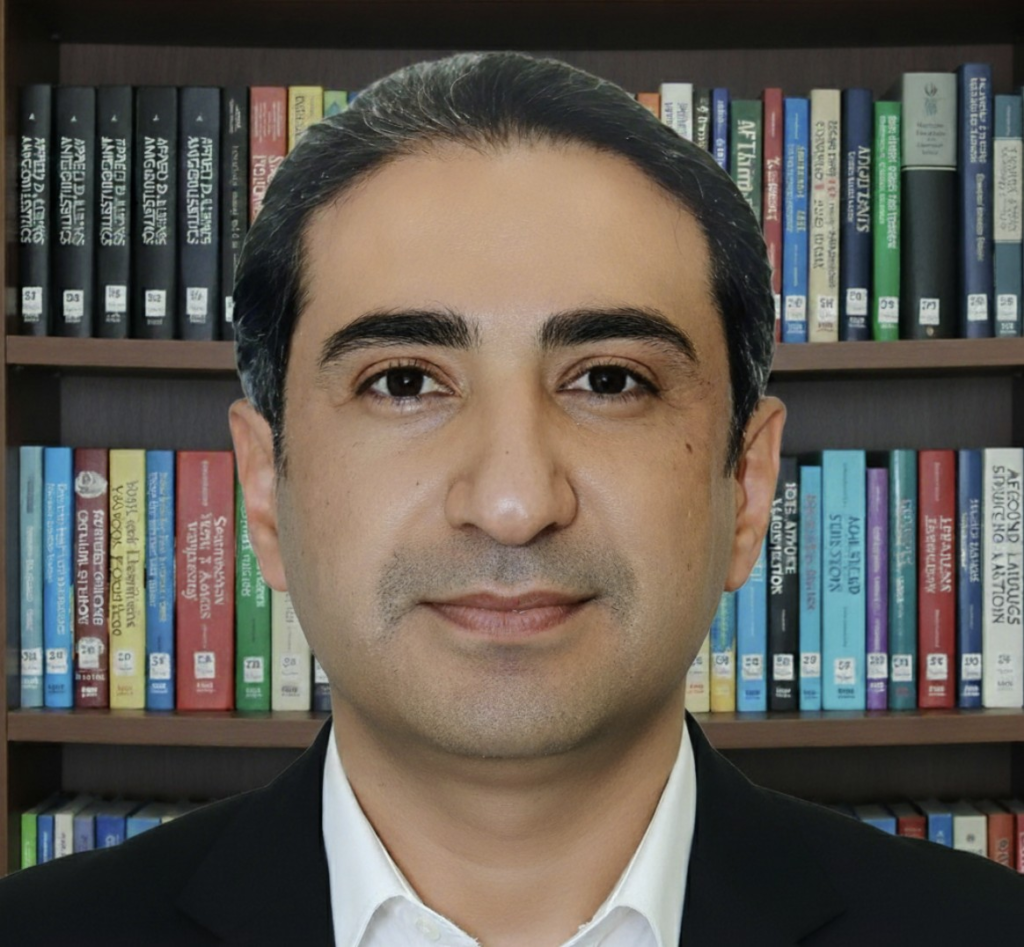
Dr. Kamal Heidari
Dr. Kamal Heidari is an applied linguist and language educator at Victoria University of Wellington, New Zealand, where his research sits at the intersection of cognitive psychology, second language acquisition, and educational technology. His current research critically examines the role of AI-driven tools in L2 learning, asking not only whether they improve outcomes but how they reshape motivation, identity, and learner agency. With over 15 years of teaching experience across diverse contexts, including Iran, China, and New Zealand, Kamal is deeply committed to inclusive, evidence-based pedagogy trying to bridge theory, practice, and emerging technologies in second language acquisition in the 21st century.
Presentation
How AI is Redefining Input in L2 Learning: From Comprehensible Input to Contextually Conscious Input
In L2 learning, Krashen’s notion of comprehensible input (i+1) has long guided pedagogy, but today’s AI systems are transforming passive exposure into dynamic, context-aware interaction. This presentation explores how intelligent algorithms now curate linguistic input not only by proficiency level but also by learner emotion, cultural background, time of day, and even physiological state, detected via voice stress, typing rhythm, or wearable data. Rather than merely simplifying syntax, AI can simulate authentic, socially nuanced communication, offering learners dialogues that reflect real-world complexity while remaining psychologically accessible. Yet this hyper-personalization raises critical questions: When does adaptive input become a linguistic echo chamber? How do we preserve the productive friction essential for growth? Drawing on recent classroom pilots and ethical design frameworks, this presentation invites educators and technologists to reimagine AI not as a silent instructor, but as a mindful mediator attuned to both language and learner humanity.